
THE SHORT ANSWER
A persuasive case study shows how a specific problem was addressed under particular conditions. It needs more than a customer logo and an enthusiastic quotation. B2B buyers benefit from the starting situation, decisions, prerequisites and supported outcomes. This structure helps you create a resource for evaluation rather than a general promise that every customer will achieve the same result.
To see how this step fits into your content strategy, read the pillar guide B2B content marketing: From useful expertise to qualified demand.
1. Choose a case around a relevant decision
Begin with the question a future customer should be able to answer using the case study. It might concern replacing a system, aligning marketing and sales or implementing across countries. A familiar customer name can help, but it does not replace a relevant story. The case needs a clear connection to your offer and a problem that a prospective buyer can recognise. Explore this further in the guide B2B nurturing content: Answer the next buying question.
Establish early which information can be published. Approval for names, logos, quotations and metrics involves separate questions. If an anonymised account is possible, explain the context as specifically as permission allows. Do not invent missing details to compensate for limited approval, and identify constraints in the available evidence instead of disguising them with vague positive language.
2. Reconstruct the starting situation with the customer
Conduct an interview focused on the situation before the project. Which task was difficult, what consequences followed, which alternatives were considered, and why did a decision become necessary then? Collect examples of workflows and responsibilities so that someone unfamiliar with the organisation can understand the starting point without needing an internal briefing or extensive background material.
Ask about expectations and reservations too. A case study becomes more substantive when it explains why a particular approach was selected. A timeline from kickoff to completion lists activities but does not explain the decision. Compare your team's assumptions with the customer's account and resolve inconsistencies before writing, rather than selecting whichever version sounds most flattering.
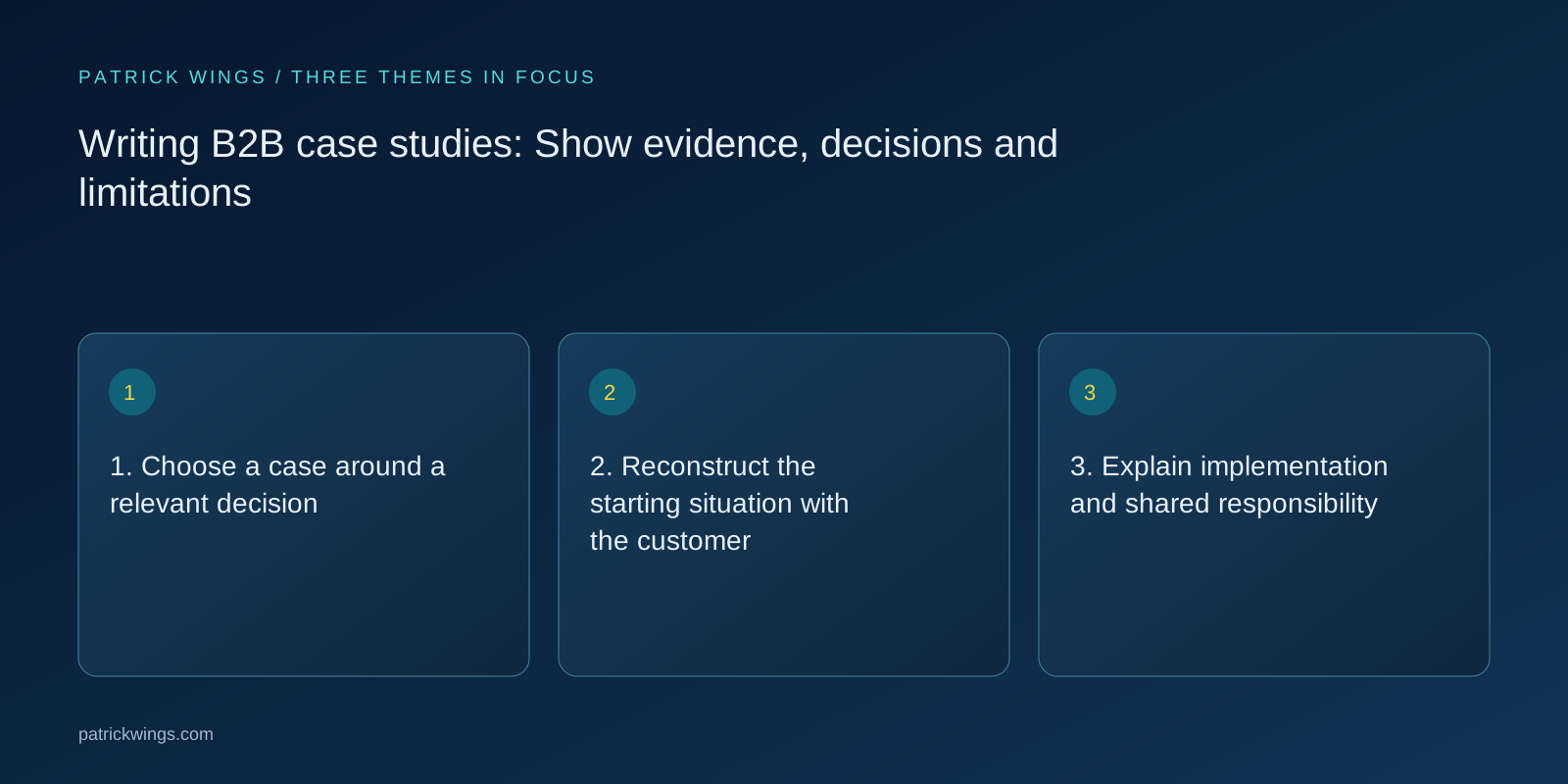
3. Explain implementation and shared responsibility
Describe what your team did and what the customer or other partners contributed. In software projects, data cleanup, internal approvals and organisational changes can be important prerequisites. They should not disappear because they make the story less polished. Prospects need a realistic view of the work a collaboration will require, including decisions that remain their responsibility after selecting a supplier.
Illustrative example: in a CRM rollout, a customer team may define roles and data fields while the provider supports configuration and training. A credible account explains that division. It does not claim that the tool automatically transformed the entire sales operation. Concrete implementation decisions can demonstrate expertise even when every effect was not captured as a numerical outcome.
4. Report outcomes with their measurement context
Every metric needs a period, definition, data source and understandable comparison. Is it an absolute value or a change? Did the measurement method change? Were other initiatives running at the same time? These details determine what a figure can establish. An increase observed after a project does not by itself prove that the project was the sole cause of that increase.
If reliable outcome data is unavailable, describe verifiable process changes or delivered scope and state the measurement limitation. Invented percentages do not make a story credible. Quotations must be genuine and approved. Their meaning should remain consistent with the documented experience rather than becoming a broader promise through editorial rewriting or removal of important qualifications.

5. Make the case study useful in evaluation
Finish with interpretation: which starting situations make the approach relevant, what prerequisites matter, and which question should a prospect examine next? A related service page can explain scope, while a detailed article explores the method. The case then becomes part of a usable information journey rather than an isolated success story intended only to make the supplier look impressive.
Create a short sales version when useful, containing the important decisions and a link to the full account. Keep the approved copy and its evidence together. Revisit product names, service scope and customer statements over time. Strong case studies remain useful when readers understand the boundaries of the experience and can relate it sensibly to their own circumstances. Explore this further in the guide B2B visual storytelling: Make complex services understandable.
INTERACTIVE / FROM READING TO ACTION
Three checkpoints for your implementation
Choose a checkpoint and track your reading progress. Checks are neither saved nor sent and do not score your business.
CHECKPOINT 01
3. Explain implementation and shared responsibility
Describe what your team did and what the customer or other partners contributed.
Explore in the article ↗CHECKPOINT 02
4. Report outcomes with their measurement context
Every metric needs a period, definition, data source and understandable comparison.
Explore in the article ↗CHECKPOINT 03
5. Make the case study useful in evaluation
Finish with interpretation: which starting situations make the approach relevant, what prerequisites matter, and which question should a prospect examine next?
Explore in the article ↗Frequently asked questions
Does every case study need metrics?
No. Verified process changes and well-explained decisions can be useful. Be transparent when outcome data is unavailable.
Can I show a customer logo without a case study?
Check permission and the relationship being presented. A public customer relationship does not automatically authorise every use of its logo.
What should customer approval cover?
The names, logos, quotations, metrics and context actually being published. Keep a record of the approved version.
How can I put “1. Choose a case around a relevant decision” into practice?
Begin with the question a future customer should be able to answer using the case study. It might concern replacing a system, aligning marketing and sales or implementing across countries. A familiar customer name can help, but it does not replace a relevant story.
What matters when working on “2. Reconstruct the starting situation with the customer”?
Conduct an interview focused on the situation before the project. Which task was difficult, what consequences followed, which alternatives were considered, and why did a decision become necessary then? Collect examples of workflows and responsibilities so that someone unfamiliar with the organisation can understand the starting point without needing an internal briefing or extensive background material.