
THE SHORT ANSWER
A substantive refresh begins after a decision to retain the content. Identify which claim, instruction or explanation no longer holds and what readers now need. The work requires a defined change objective, current evidence and renewed verification. A new date or additional paragraphs alone cannot make an existing article dependable or resolve instructions that have become misleading.
To see how this step fits into your content strategy, read the pillar guide B2B content marketing: From useful expertise to qualified demand.
Translate diagnosis into an assignment
Take the retention decision together with its reasons and known defects. Define a specific update, such as explaining changed prerequisites or replacing an obsolete procedure. Separate corrections from a new purpose for the whole article. If the original task no longer fits, return to the portfolio decision. This guide concerns revising content that remains useful. Scope and ownership should therefore follow its reader task, rather than simply reflecting a list of newly available topics that could be inserted to make the page look current. Explore this further in the guide Keeping, updating or retiring outdated content.
Inspect old and new section by section
Read the existing version with its sources and mark correct, outdated and uncertain passages. Include examples, screenshots, downloads and linked instructions. For every change, record the cause and missing information. A product update can affect several sections even when only one screen looks different. Pay particular attention to prerequisites and exceptions. Merely replacing visible labels may leave the recommendation dependent on assumptions that no longer hold or require a different evaluation, causing readers to follow an apparently updated but substantively obsolete procedure. Explore this further in the guide Planning editorial calendars around capacity and dependencies.
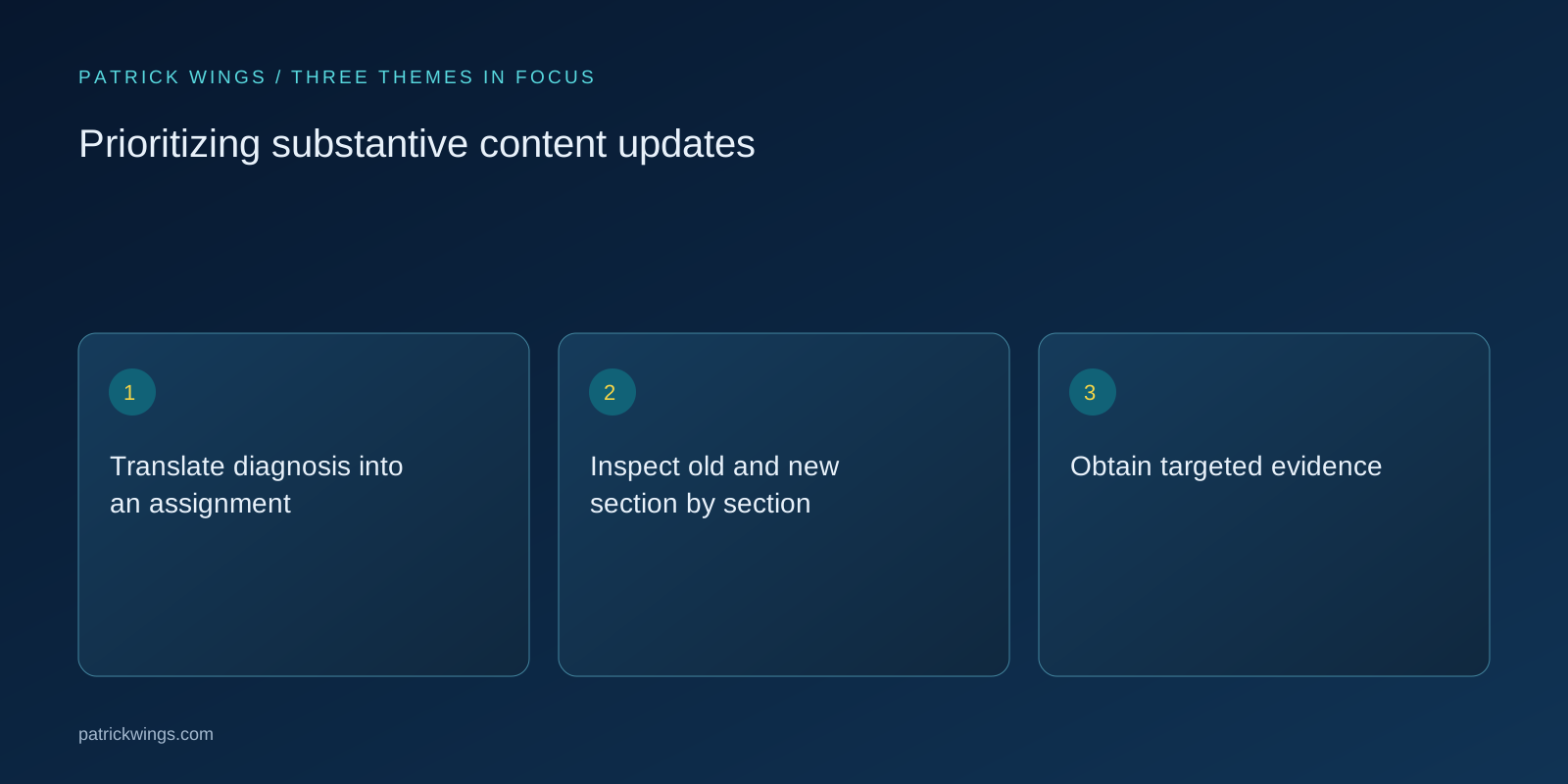
Obtain targeted evidence
Investigate open questions through current original sources and responsible experts. Record product state and scope. A source should not replace another merely because it is newer; it must support the actual statement. Check whether older figures remain comparable or use different definitions. Where information is missing, explain the boundary. A useful refresh may narrow a claim or remove a weak comparison rather than adding more content and stronger promises. Keep the research tied to the specific change objective so the assignment remains achievable and editorially coherent.
Work through a hypothetical revision
Suppose an import-preparation guide now needs an additional approval stage. The editor replaces the sequence, identifies the responsible role and updates the example to include the missing status. An old screenshot is recreated and its labels checked. This hypothetical case claims no measured conversion improvement. It shows how one factual change affects introduction, instructions, example and supporting material. The revised version must reconnect these parts into a consistent working path so readers do not encounter contradictory directions between the overview and the detailed steps they follow.

Check coherence and reused material
After editing, read the entire article rather than only changed paragraphs. Do introduction, headings, FAQ and next step still match the explanation? Inspect derived emails, one-pagers and translations as well. Otherwise an accurate website may coexist with obsolete files still being sent to buyers. Connect the update assignment to affected versions and name their owners. URL changes and search consequences belong with the responsible search process; the editorial task here is to restore a coherent explanation and propagate its corrections through the materials that depend on it.
Approve again and define maintenance
Have changed claims verified and test revised instructions with someone outside the project. Record completed changes and remaining limitations. Use an update date that reflects actual work. Define the next trigger, such as an announced version change. Observe questions about the revision and repair misunderstandings. A refresh is complete when the retained article reliably performs its reader task again and affected materials agree, rather than when a planned word count has been added or the introduction has been rewritten to make an old page appear recent.
INTERACTIVE / FROM READING TO ACTION
Three checkpoints for your implementation
Choose a checkpoint and track your reading progress. Checks are neither saved nor sent and do not score your business.
CHECKPOINT 01
Obtain targeted evidence
Investigate open questions through current original sources and responsible experts.
Explore in the article ↗CHECKPOINT 02
Work through a hypothetical revision
Suppose an import-preparation guide now needs an additional approval stage.
Explore in the article ↗CHECKPOINT 03
Check coherence and reused material
After editing, read the entire article rather than only changed paragraphs.
Explore in the article ↗Frequently asked questions
Is a new date enough?
No. It should reflect actual substantive review and any necessary revision.
Should every refresh rewrite everything?
Only when coherence requires it. Derive scope from affected claims and dependencies.
Who chooses removal instead?
The portfolio decision process; this workflow assumes a reasoned decision to retain the piece.
How can I put “Translate diagnosis into an assignment” into practice?
Take the retention decision together with its reasons and known defects. Define a specific update, such as explaining changed prerequisites or replacing an obsolete procedure. Separate corrections from a new purpose for the whole article.
What matters when working on “Inspect old and new section by section”?
Read the existing version with its sources and mark correct, outdated and uncertain passages. Include examples, screenshots, downloads and linked instructions. For every change, record the cause and missing information.