
THE SHORT ANSWER
A resource download is not complete just because a form has been submitted. The visitor still needs to locate, open and understand the material. A useful thank-you page therefore confirms the outcome and provides dependable access first. It can then offer a relevant continuation. For SaaS and IT businesses, this small piece of content connects the landing-page promise with actual use of a guide, template or webinar.
To see how this step fits into your content strategy, read the pillar guide B2B content marketing: From useful expertise to qualified demand.
Confirm the completed action precisely
Explain what succeeded: was a resource made available, a request sent or an email triggered? These are different outcomes. A generic thank-you leaves the status unclear. If immediate access is available, put the resource prominently below the confirmation. Name its format and, where useful, file size. If the action starts a manually handled request, explain that process instead. The page should remain understandable without remembering the exact form text, including when someone returns through their browser history. A clear completion message gives visitors a reliable starting point for whatever follows. Explore this further in the guide Writing B2B calls to action with clear consequences.
Support immediate and later access
A visible download link helps when an email is delayed or cannot be found. Check that the resource works on mobile and that its filename and document title match the promise. If access expires, explain the limitation and provide a supported alternative route. Do not promise a permanent library when none exists. For a package containing several files, describe which item supports which task. Visitors should not have to open everything to discover the useful working material. Keep the access instructions close to the relevant link rather than burying them beneath promotional content. Explore this further in the guide Writing resource pages that demonstrate usefulness before download.
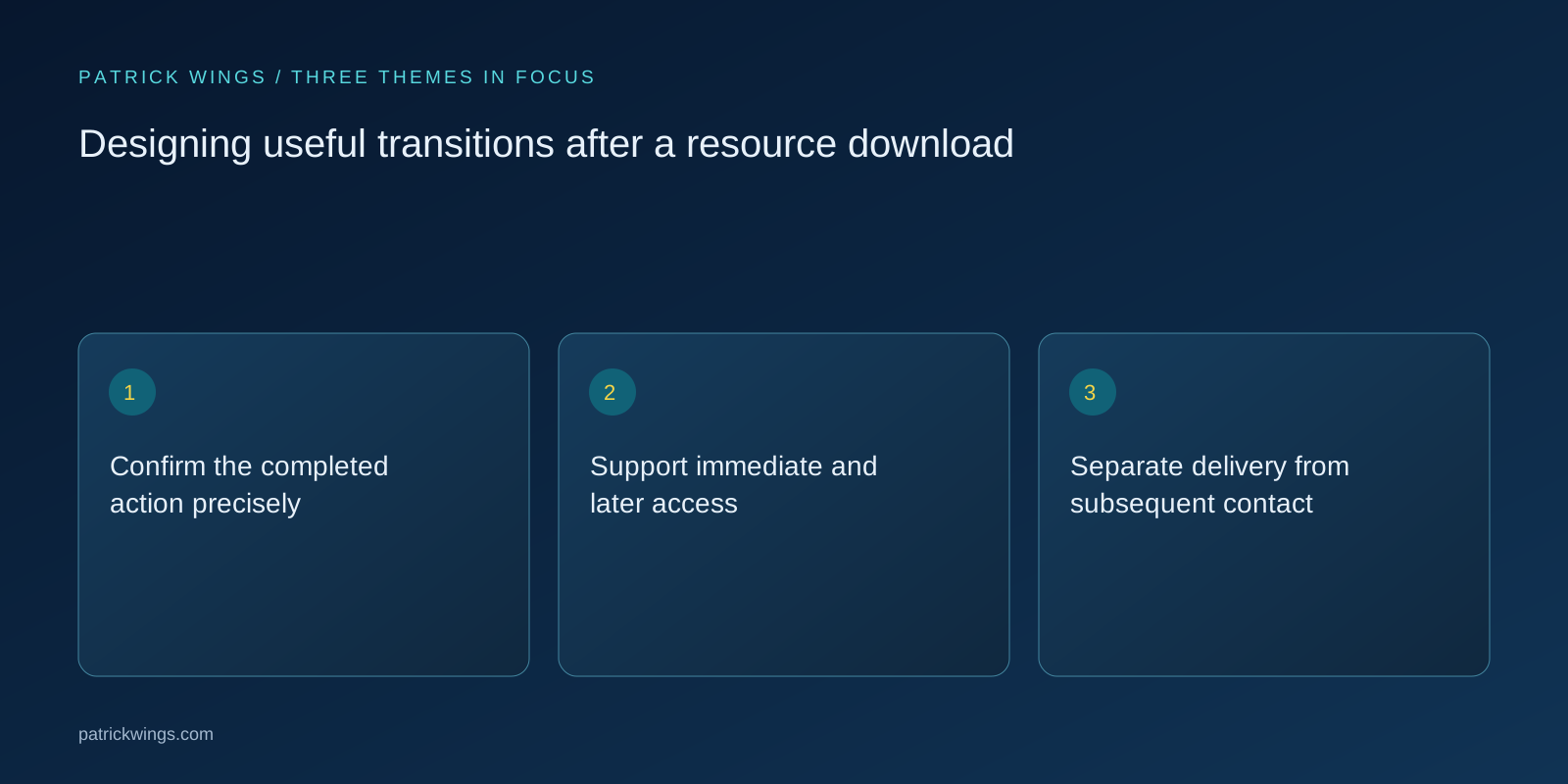
Separate delivery from subsequent contact
If an email delivers the requested resource, describe its sender and purpose clearly enough to recognize it. Further communication needs a separate, understandable explanation of the process that actually exists. Do not write “we will be in touch” when the only action is an automated delivery. Equally, a personal sales call should not emerge unexpectedly from a resource request described only as a download. Align the wording with responsible colleagues. A thank-you page should not conceal previously undisclosed conditions or silently change the purpose established on the landing page and form.
Choose a useful optional continuation
The next link should follow naturally from the resource. After a requirements worksheet, a completed example may be more helpful than an immediate sales meeting. A decision guide might lead to an explanation of the relevant consulting scope. Choose one primary continuation and keep it optional. Someone who only wants to read the material should be able to finish without extra steps. Check that the recommended page makes sense independently and does not unexpectedly request more information. Relevance comes from the reader’s current task, rather than solely from the commercial destination the business prefers.

A hypothetical transition
A fictional SaaS vendor provides a CRM data-cleaning checklist. Its confirmation page acknowledges access, offers the direct PDF link and explains that a copy has also been emailed. Below that, an optional example shows how duplicate-record cases might be documented. A consultation appears as a separate option with its own stated purpose. The page neither implies that the reader requested a meeting nor guarantees successful data cleaning. This hypothetical example illustrates the ordering of information. It is not a real client case, a claim about conversion impact or evidence of increased resource usage.
Plan for errors and returning visitors
Test interrupted connections, repeat visits and failed file loading. A confirmation page should not claim that a document has opened when it only supplies a link. Provide clear help if downloading fails. Check whether redirects, language changes or expired sessions make returning difficult. Keep sensitive form information out of publicly visible URLs. An English request should receive the promised resource in the advertised language. A cheerful message does not remedy an unexpected language mismatch. Treat these edge cases as part of completing the original task, rather than optional finishing details for a later release.
Distinguish views from resource use
A thank-you page view indicates a process step, not proof that someone read or applied the material. Establish which events your measurement approach actually distinguishes and how repeat visits are handled. Combine technical observations with practical questions: was the file easy to find, did it match the preview and was the continuation useful? A small usability study can uncover comprehension problems without replacing a statistical impact test. Explain reporting limitations so a basic confirmation view is not accidentally counted as a qualified sales conversation or treated as evidence of a completed learning outcome.
INTERACTIVE / FROM READING TO ACTION
Three checkpoints for your implementation
Choose a checkpoint and track your reading progress. Checks are neither saved nor sent and do not score your business.
CHECKPOINT 01
Separate delivery from subsequent contact
If an email delivers the requested resource, describe its sender and purpose clearly enough to recognize it.
Explore in the article ↗CHECKPOINT 02
Choose a useful optional continuation
The next link should follow naturally from the resource.
Explore in the article ↗CHECKPOINT 03
A hypothetical transition
A fictional SaaS vendor provides a CRM data-cleaning checklist.
Explore in the article ↗Frequently asked questions
Should the resource be available directly?
Where appropriate, offer direct access as well as email delivery. Verify the file, format and language.
How many next steps should appear?
Start with one clear optional continuation that relates to the task supported by the resource.
Does a confirmation view prove lead qualification?
No. It records a process step; qualification requires separate criteria and relevant evidence.
How can I put “Confirm the completed action precisely” into practice?
Explain what succeeded: was a resource made available, a request sent or an email triggered? These are different outcomes. A generic thank-you leaves the status unclear.
What matters when working on “Support immediate and later access”?
A visible download link helps when an email is delayed or cannot be found. Check that the resource works on mobile and that its filename and document title match the promise. If access expires, explain the limitation and provide a supported alternative route.