
THE SHORT ANSWER
An explainer video needs a script connecting visuals, speech and reasoning. Begin with a concrete question and develop the explanation in a usable sequence. Plan spoken access to essential visual information and label illustrative examples. A short film becomes useful when viewers can explain the relationship afterwards or choose an appropriate next action from the information they have received.
To see how this step fits into your content strategy, read the pillar guide B2B content marketing: From useful expertise to qualified demand.
Choose the outcome and prior knowledge
State what viewers should understand or do afterwards. Initial product orientation differs from instructions for a particular setting. Identify expected knowledge and the central question. Include information supporting that path. Completeness does not require mentioning every feature. When several independent tasks emerge, consider separate videos or supporting material. Each explanation can then establish prerequisites properly instead of moving rapidly between subjects and making a long presentation appear shorter only by reducing the time available to understand each concept and its relationship to the next. Explore this further in the guide Designing expert webinars around a useful learning outcome.
Turn reasoning into scenes
Write the conceptual sequence before scenes. Give each scene one claim and a clear transition. Introduce problem, mechanism and example in an order understandable without specialist knowledge. Avoid extensive company introductions when they delay the viewer's question. Identify terms needing explanation. Ask whether animation clarifies a relationship or simply adds movement. The scene sequence should have a substantive rationale you can explain before design begins, so production choices reinforce the argument rather than forcing the narration to accommodate effects chosen for their appearance alone.
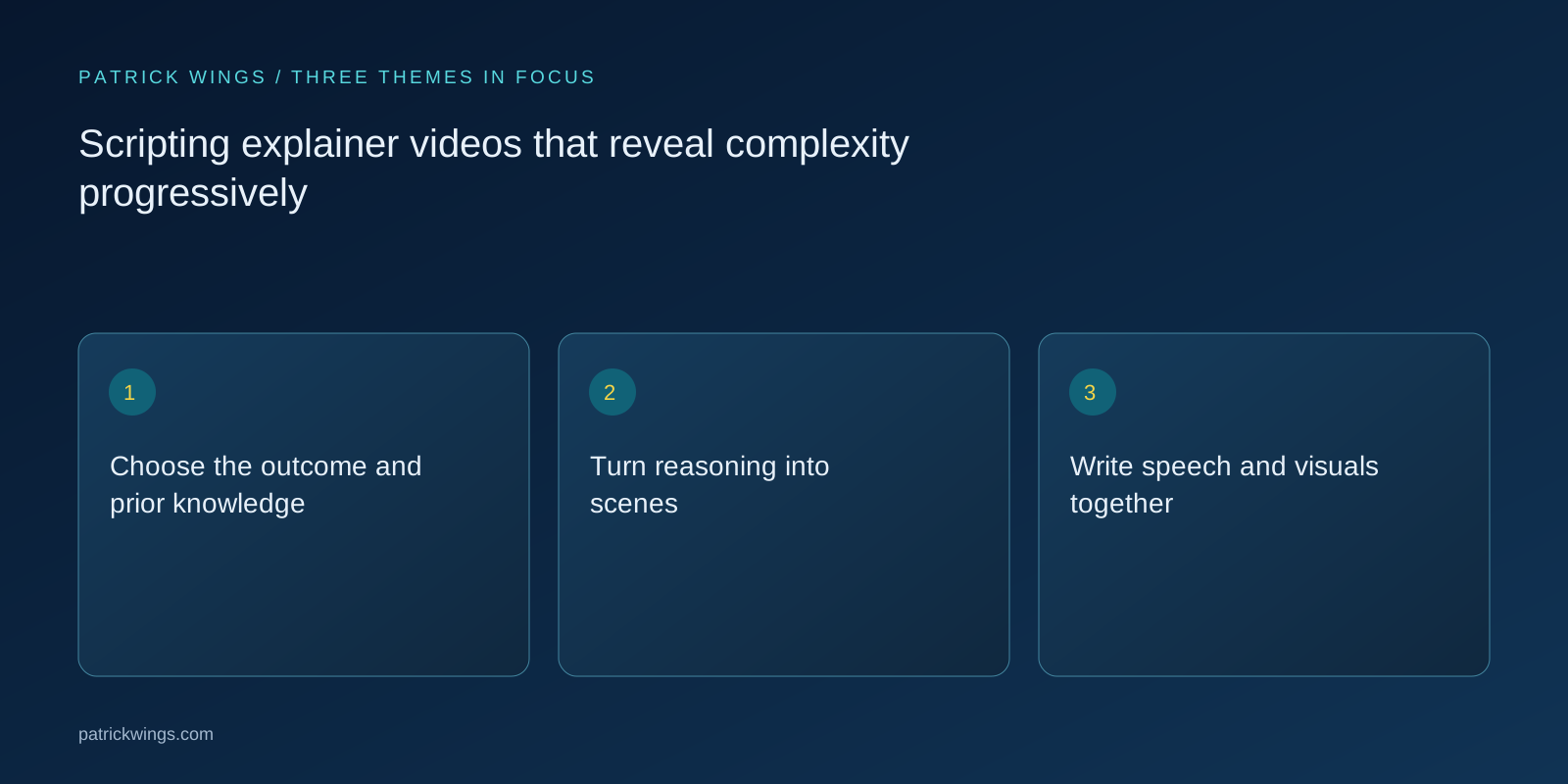
Write speech and visuals together
Place narration, visible action and essential on-screen text alongside one another. Let speech convey important information otherwise available only visually. W3C recommends considering these access needs during planning. Avoid “as shown here” when the meaning disappears without sight of the image. Allow time to understand a new representation before adding detail. Read terminology aloud. A sentence that works on paper may become too dense in speech or emphasize the wrong condition. Revise wording and pacing together instead of treating the recorded voice as a final cosmetic layer.
Develop a hypothetical explanation
Suppose the video explains a fictional approval chain for technical documents. One scene introduces the draft; another distinguishes factual review from publication authorization. Narration names both roles while the visual shows their handoff. An exception explains missing information. This hypothetical example describes no real software and claims no measured time saving. It shows how a video can reveal complexity progressively without collapsing responsibilities into one apparently automatic movement or concealing a necessary question that determines whether the process should continue to the next stage at all.

Plan access and supporting material
Include checked captions, a transcript and explanation of essential visual information. A transcript should convey important unspoken content too. Decide early what can enter the main narration and what needs additional description. Check readable text and distracting background sound. A worksheet or written procedure can help people revisit individual steps later. These resources need the same substantive state as the film. Treat them as part of publication, not extras added after production without review time, because inconsistent supporting material can undermine an otherwise accurate and understandable recording.
Test the script before production
Read the script with simple stills or rough scenes. Ask someone outside the project to repeat the relationship and identify unanswered questions. Repair missing prerequisites and inconsistent transitions first. Timing alone cannot show comprehension. Have technical claims checked and preserve the approved version. Later, a mapping between scene, statement and product state helps maintenance. You can then decide which passages require recording again and which remain correct, rather than replacing everything indiscriminately or leaving a visible product change unexplained because the original production material is difficult to trace. Explore this further in the guide Test messaging before rewriting your website.
INTERACTIVE / FROM READING TO ACTION
Three checkpoints for your implementation
Choose a checkpoint and track your reading progress. Checks are neither saved nor sent and do not score your business.
CHECKPOINT 01
Write speech and visuals together
Place narration, visible action and essential on-screen text alongside one another.
Explore in the article ↗CHECKPOINT 02
Develop a hypothetical explanation
Suppose the video explains a fictional approval chain for technical documents.
Explore in the article ↗CHECKPOINT 03
Plan access and supporting material
Include checked captions, a transcript and explanation of essential visual information.
Explore in the article ↗Frequently asked questions
How long should an explainer be?
Use the length the explanation needs, test understanding and separate independent tasks.
Should the script describe animation?
Yes where it explains a claim; define meaning before detailed visual execution.
Do captions matter only after editing?
No. Plan them early and check the finished captions against the approved meaning.
How can I put “Choose the outcome and prior knowledge” into practice?
State what viewers should understand or do afterwards. Initial product orientation differs from instructions for a particular setting. Identify expected knowledge and the central question.
What matters when working on “Turn reasoning into scenes”?
Write the conceptual sequence before scenes. Give each scene one claim and a clear transition. Introduce problem, mechanism and example in an order understandable without specialist knowledge.